Smart Plugs for a Smoother Morning Coffee Routine
For an early riser who wants the kitchen ready without replacing a trusted appliance, the best purchase is the one that solves the routine cleanly—not the model with the longest feature list.
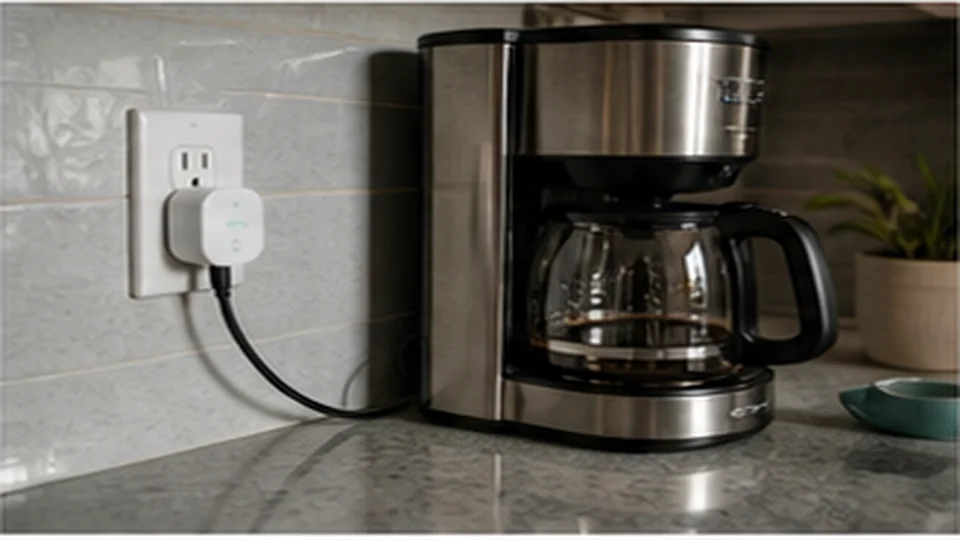
Picture this: an early riser who wants the kitchen ready without replacing a trusted appliance. The product is not the point of the evening; it is infrastructure for everything else. That is why this guide starts with the room, the people in it, and the annoyances worth removing.
Quick verdict
Prioritize load rating, physical controls, schedules, Matter support, and safe appliance behavior. The goal is small automation that remains understandable to everyone at home. Skip premium extras unless they improve a routine you can name today.
An early riser who wants the kitchen ready without replacing a trusted appliance.
Think twice ifYou are buying mainly for a speculative feature, cannot confirm compatibility, or the ongoing subscription and replacement costs are unclear.
Start with the real-life job
Write down the two moments when this device would matter most. Include who uses it, which room it lives in, what must already be connected, and what happens when Wi-Fi or a phone app is unavailable. This small exercise separates a useful tool from an expensive source of friction.
In our scenario, success means small automation that remains understandable to everyone at home. It does not require owning every feature in the category. A simpler model can be the stronger choice when its controls are obvious, its support policy is clear, and consumables or accessories stay available.
The buying criteria that deserve your attention
1. Compatibility before capability
Check operating-system, connector, voltage, network, mounting, room-size, and ecosystem requirements on the manufacturer’s current product page. “Works with” labels are only a starting point: confirm whether the particular feature you need works locally, through a hub, or only through a cloud account.
2. Everyday controls
Apps are useful for setup, but shared household technology should still make sense to a guest or family member. Look for physical controls, clear status lights, sensible defaults, and a recovery path after a power or network interruption.
3. Ownership cost
The purchase price is only one line. Add required subscriptions, replacement filters or batteries, proprietary accessories, warranty coverage, and the likely cost of keeping the device useful for several years. We avoid fixed prices because promotions and regional availability change; use a current-price link when one is provided.
4. Privacy and updates
For connected devices, review account security, data controls, update commitments, microphone or camera indicators, local-storage options, and deletion procedures. Place sensors deliberately. A useful automation should not require collecting more information than the job demands.
Three sensible shopping paths
Value path: choose the least complex model that meets the core requirement. This works well when one person uses the device in one room and advanced integrations would go untouched.
Balanced path: spend for improved reliability, comfort, repair support, or a feature you will use weekly. This is the right default for most households because it protects the routine without paying for a showcase specification.
Premium path: consider it only when a demanding environment, accessibility need, professional workload, or long support horizon makes the upgrade concrete. Premium should buy a measurable improvement in your own use case, not merely a nicer product page.
What not to overpay for
Do not pay extra for theoretical maximums your home, internet connection, source material, or workflow cannot use. Avoid locking into a new ecosystem for one minor convenience. And treat “AI,” “pro,” and “smart” as labels until the documentation shows exactly what changes for you.
A five-minute pre-purchase check
- Measure the intended space and photograph relevant ports, wiring, or mounts.
- Confirm compatibility on an official support page, not only a marketplace title.
- Read the return window, warranty, and subscription terms.
- Check the price and availability of consumables or replacement parts.
- Decide which notification, microphone, location, and data settings you will disable.
Our bottom line
For an early riser who wants the kitchen ready without replacing a trusted appliance, buy around load rating, physical controls, schedules, Matter support, and safe appliance behavior. Choose the product that makes the ordinary day calmer and remains understandable when the novelty wears off. If two options solve the same job, favor the one with clearer support, fewer recurring costs, and the easier return policy.
Frequently asked questions
Should I buy the newest model?
Not automatically. A newer model is worthwhile when it fixes a compatibility, support, efficiency, or usability limitation that affects your routine. Otherwise, a supported previous generation can be the more sensible value.
How does GearNexio choose recommendations?
We organize choices by scenario, study published specifications and support material, and call out tradeoffs. We do not fabricate hands-on experience, benchmark results, prices, or ratings.
When should I wait?
Wait if your current setup still solves the job, a required standard is changing, compatibility is uncertain, or a purchase would force several unnecessary replacements. A confident “not yet” is a valid buying decision.